Fine Tubes supplies the civil aviation, military and space sectors with high performance tubes used in airframe and engine applications

Aerospace

We manufacture lightweight, high strength precision tubes engineered to meet the demanding requirements of both current and next generation aerospace programs, delivering reliability, efficiency, and structural performance in critical commercial and military aircraft applications.

Where are aerospace grade tubes used in airframe and engine applications?

For more than 75 years, we have been developing aerospace-grade tubes that perform in the most challenging airframe and engines applications including:
Aircraft landing gear uses cold drawn seamless tubes from Fine Tubes for hydraulic and pneumatic control systems

What makes lightweight, durable and heat resistant alloys critical for aerospace applications?

Selecting the optimum alloy for your aerospace application is key to have an optimised final product. We offer a wide range of lightweight, durable and heat-resistant super alloys that enable aircraft to fly more efficiently than ever.

Aerospace Customer Approvals

At Fine Tubes, our expert engineers work in partnership with raw material suppliers, major Aerospace manufactures and Tier 1 and 2 supply chains to deliver the best solution.

We are approved suppliers for OEMs including: Airbus, Boeing, Bombardier, Embraer, GE Aviation, Liebherr, Lockheed Martin, Raytheon, Rolls-Royce, SNECMA-SAFRAN and UTC.
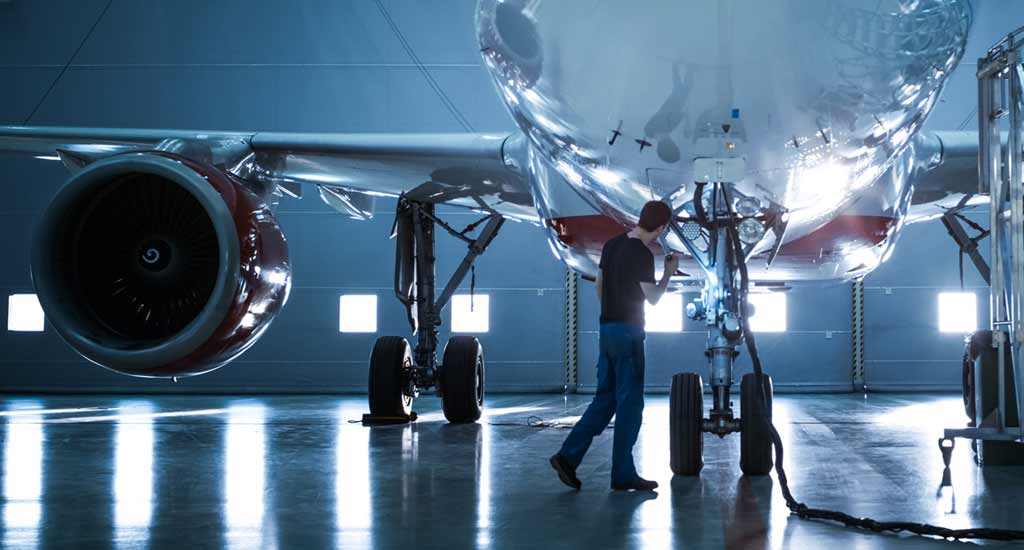
An engineer checking tubes in control rods and transmission systems on an aeroplane

Which material grades and specifications are used in aerospace applications?

Starting with stainless steels we have continually expanded our process capability. Our metallurgists have developed a unique expertise in processing nickel alloys for high temperature and high strength applications and titanium alloys where a high strength to weight ratio is required.

Which manufacturing standards apply to aerospace grade titanium?

Titanium 6AL/4V Titanium 3AL/2.5V Titanium C.P.
FT2312 seamless ABS 5004 ASTM B338

AMS 4943 BAEM 4044 (SL7)

AMS 4944 MSRR 8609

AMS 4945 AMS 4942

MBBN 6001-4

MSRR 8673

ABS 5141

Which manufacturing standards are used for aerospace grade stainless steel?

Stainless steel 21-6-9 Other stainless steels
ASN-A3288/NSA384510 MSRR 6524
DAN 41 BS2T66/T67
SO7-2210 BST68/T69
BACM 157 BST72/T73
AMS 5561 AMS T-6845
MSRR 6598 MIL-T 8808
ABM 7-3058 AMS 5566

Which manufacturing standards apply to aerospace nickel alloys?

Nickel alloys / Nimonics
AMS 5580
Alloy 600 
AMS 5581 Alloy 625
AMS 5582
Alloy X750
AMS 5589  Alloy 718 
BS HR 403 Alloy 75 
BS HR 404 Alloy 263
MSRR 6513 FV607
MSRR 7006 Nimonic® 75
MSRR 7037 Alloy C263

Precision tubes act as the core transport network for fluids, gases, and mechanical loads in aircraft, supporting systems like fuel, hydraulics, and control mechanisms. Their reliability directly impacts safety and aircraft performance.

Aerospace tubing must withstand:

  • Extreme temperatures and pressure fluctuations
  • Continuous vibration and fatigue cycles
  • Corrosive environments

These conditions require zero-defect manufacturing and strict quality standards not seen in most industries. 

Different alloys are selected based on application needs:

  • Titanium → lightweight, high strength-to-weight ratio
  • Nickel alloys → high temperature resistance
  • Stainless steel → balanced strength and corrosion resistance

Choosing the right material ensures optimal aircraft efficiency and durability. 

Lightweight, high-strength tubing reduces overall aircraft weight, which:

  • Lowers fuel consumption
  • Decreases emissions
  • Extends flight range

Even small weight reductions can have a significant system-level impact. 

Precision tubing allows engineers to design:

  • Compact fluid systems with fewer joints
  • Optimized routing in complex airframes
  • High-efficiency thermal and control systems

This supports innovation in next-generation aircraft and space systems.

Engineers must balance:

  • Weight vs strength
  • Flexibility vs pressure tolerance
  • Cost vs performance

The goal is to meet strict safety requirements while optimizing efficiency and manufacturability.

Aerospace tubes must meet certifications like AS9100 and NADCAP, ensuring:

  • Full material traceability
  • Strict manufacturing controls
  • Verified performance under critical conditions

This guarantee’s reliability in safety-critical applications.

Advanced tubing materials and designs enable:

  • Higher operating temperatures and pressures
  • More compact and lightweight systems
  • Integration into space and satellite applications

This makes them essential for evolving aerospace technologies.

Critical systems include:

  • Hydraulic and pneumatic control systems
  • Fuel delivery and thermal management systems
  • Landing gear and actuation systems
  • Engine and airframe structures

Failure in any of these areas can directly impact aircraft safety.

Your contact
Stuart Griffiths, Product Manager - Tube 
Stuart Griffiths
Product Manager - Tube
Email link  Email
Telephone icon +44 (0)1752 876408